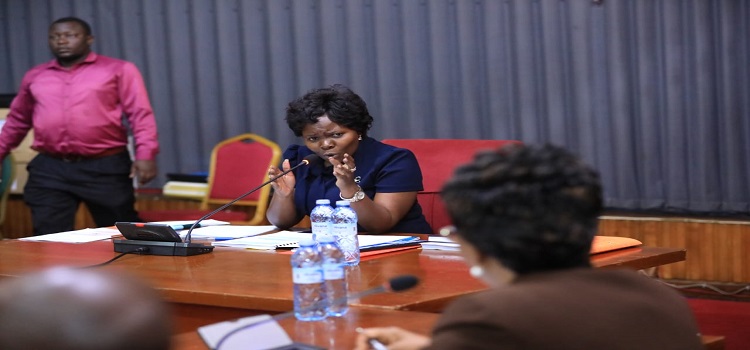
The Public Accounts Committee (Central Government) has faulted officials from the Ministry of Public Service for failing to account for the involvement of active public servants in electoral processes, during the recently concluded 2026 general elections.
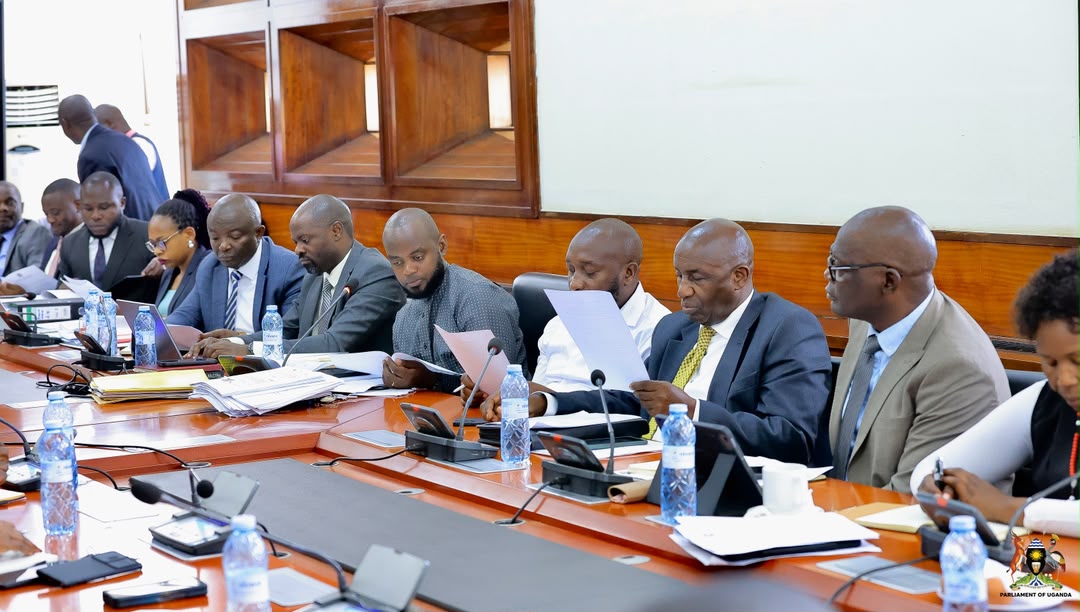
While chairing the Committee meeting on Monday, 02 March 2026, Hon. Gorreth Namugga, noted accounts of teachers and head teachers who served as polling agents, returning officers and presiding officers during the elections.
“Is a public officer supposed to participate in political activities leave alone as a candidate? Is it lawful for a head teacher with an appointment letter, to get an appointment from the Electoral Commission to serve as a presiding officer during elections,” Namugga queried.
Hon. Patrick Nsamba (NUP, Kassanda County North) reported that the District Education Officer (DEO) and Chief Administrative Officer (CAO) in his district were seen to participate in political activities.
“The DEO of Kassanda District was a chief mobiliser for the ruling party. The CAO of the district denied to give us money for roads, which she put into mobilisation for the ruling party. Where do the public run to when public servants do such things?” Nsamba asked.
Hon. Asuman Basalirwa (JEEMA, Bugiri Municipality) alluded to the 2016 Amama Mbabazi electoral petition in the Supreme Court which raised concerns about the inaction of the Ministry of Public Service when similar issues were brought to their attention.
He noted that public officers tend to take partisan positions in political processes, going against provisions made in the Uganda Public Service Standing Orders.
“What sort of regulations do you issue to public servants, and what disciplinary measures and processes do you take? These are issues in the public domain so you will not wait for a complaint before you act,” Basalirwa said.
The Permanent Secretary at the Ministry of Public Service, Catherine Bitarakwate, said provisions in the Public Service Act, 2008 and the Uganda Public Service Standing Orders prohibit public officers from standing for elective positions or openly displaying partisan affiliations.
“This serves the purpose of giving continuity and objectivity in service delivery, and we have issued circulars to this effect. We have not received reports of teachers or head teachers who were involved in the electoral process, but when we do we will be able to guide further,” Bitarakwate said.
The Permanent Secretary’s response did not meet the satisfaction of the legislators’ query, who asserted the need for an immediate response on whether public servants were authorised to act as electoral officials during the elections.
“Is it in your mandate to provide guidance on whether public servants can participate and act in politics or it is your statement that it is outside your mandate and rather that of the Head of Public Service?” Basalirwa pressed.
Bitarakwate said a consultation made during a short break of the meeting, guided that the Ministry would study the concerns raised and bring a response to the Committee.
“In the guidance, public officers are not supposed to display any partisan affiliations in their service. But in the particular instances that have been raised, we would like to receive the facts in order to make a more appropriate interpretation in consultation with the Attorney General,” she added.
The officials from the Ministry had appeared before the Committee to respond to audit queries raised by the Auditor General, on financial statements for financial year 2024/2025.
The officials were, however, asked to return at a later date in regard to the concerns raised by MPs.